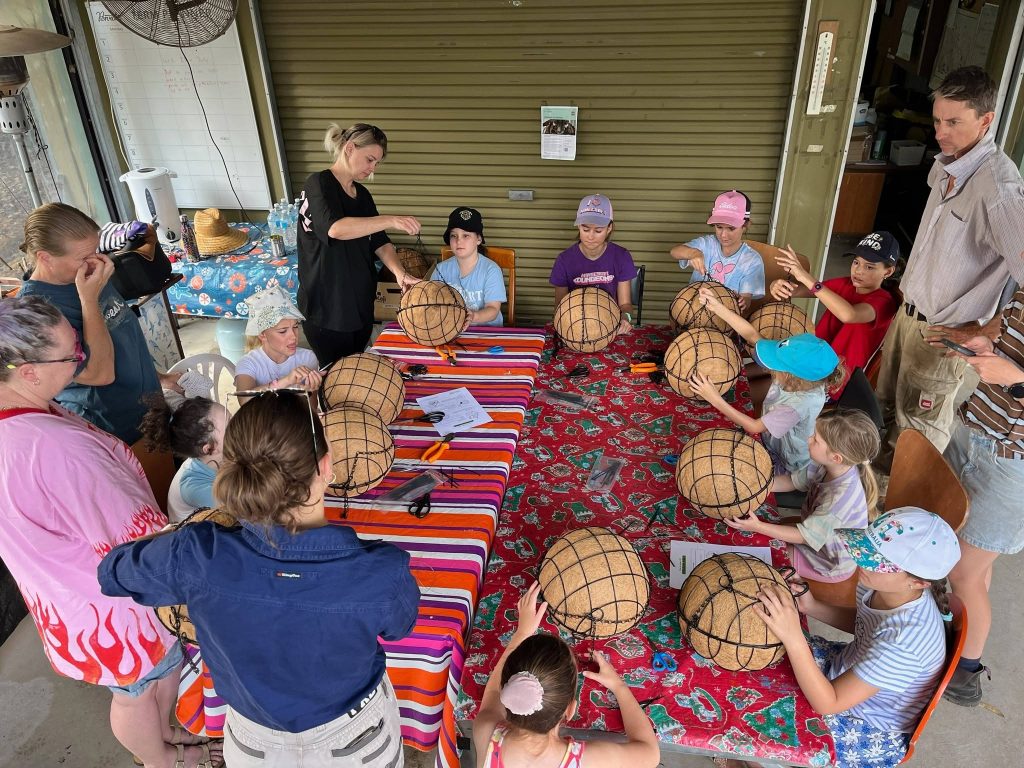
During the summer school holidays, the Riverina Highlands Landcare Nursery buzzed with excitement as 15 young nature enthusiasts joined the Hollows for Homes workshop. Presented by Cherie White from Riverina Local Land Services, the free event introduced children to the fascinating world of animals that rely on tree and aquatic hollows— including fish, birds, reptiles, and possums. Participants even got a close-up look into a real gum tree hollow using a special camera and then rolled up their sleeves to craft hand-made possum dreys to take home and install.
The issue
Across New South Wales, hollow-bearing trees are declining at an alarming rate, largely due to land clearing and fire. This loss has been officially listed as a key threatening process to biodiversity, impacting countless species who depend on hollows for shelter, nesting, and breeding. Without intervention, many native animals face a loss of essential habitat.
The solution
The Hollows for Homes workshop gave children and families the chance to take practical action for wildlife. Participants learned about the importance of natural hollows and created artificial possum dreys—snug, safe alternatives to help bridge the gap as tree hollows disappear. Cherie shared tips on how to install dreys effectively: secure them off the ground, choose a sheltered position, face openings away from prevailing winds, and ensure they’re firmly tied to prevent swinging.
The impact
The session fostered hands-on learning, environmental awareness, and community connection. Each child left with both a drey to install and a deeper understanding of how small actions—like creating wildlife homes—can make a real difference in local ecosystems. The event strengthened ties between Landcare, Local Land Services, and families, inspiring the next generation of habitat protectors.
Learnings
Simple, practical activities—like building and installing possum dreys—can empower communities to actively support biodiversity. By understanding and addressing habitat loss, even at a small scale, young people can contribute to the long-term health of New South Wales’ native wildlife.
Capacity building – LEP23_036_LLC7_7