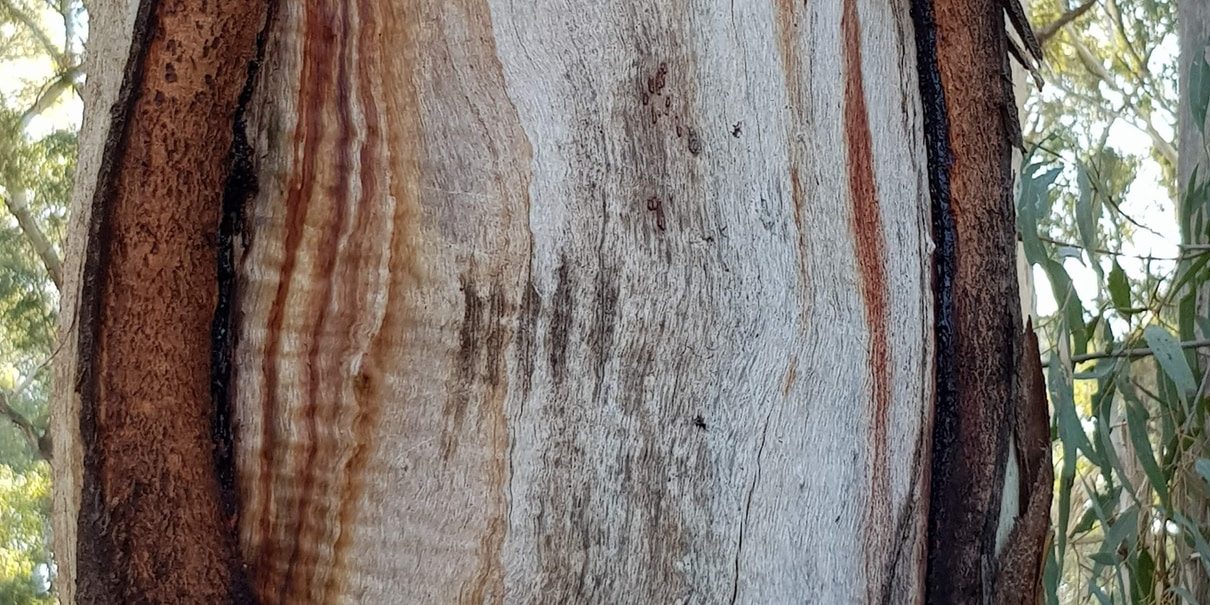
There are trees living in our landscape that have modifications older than we can put our minds to. The modifications were made in a time that was more intentional, when the tools of our time were but a thought on a distant shore.
Through stories of their parents and guidance of their community, First Nations People sat by a water’s edge and formed axes by grinding stone on stone. This created an edge so sharp that it was able to pierce the bark of a big old gum tree.
First Nations People knew what trees were best to carve a Coolamon from, the time of year and the mark that they would leave behind. As they walked through Country with their tools in hand, they looked for those trees and made sure to only take from trees that were healthy enough to give over their bark.
Once they chose their tree, they carefully marked the place where the Coolamon would come from. Making their first cut, they made sure to only cut down to the cambium, using their axe and hammerstone. Slowly they followed the marked shape, using this process until the piece fell into their hands, becoming a vessel for carrying food, water, weapons and nurturing babies.
You will find these modified trees – remnants of First Nations Cultural heritage – across the whole of the Murrumbidgee catchment area. You will also find recent markings from today’s generations continuing their cultural practices.
Looking after remnant cultural heritage is something we all play a part in. This link will take you to a Murrumbidgee Landcare Inc. resource with more information on cultural heritage and guidance on what to do when you come across modified trees.
If you would prefer to hear a spoken version of this article, the link below will take you to a beautiful short video featuring the voice of Nioka Dupond.